

Shed light on your federal trademark options.
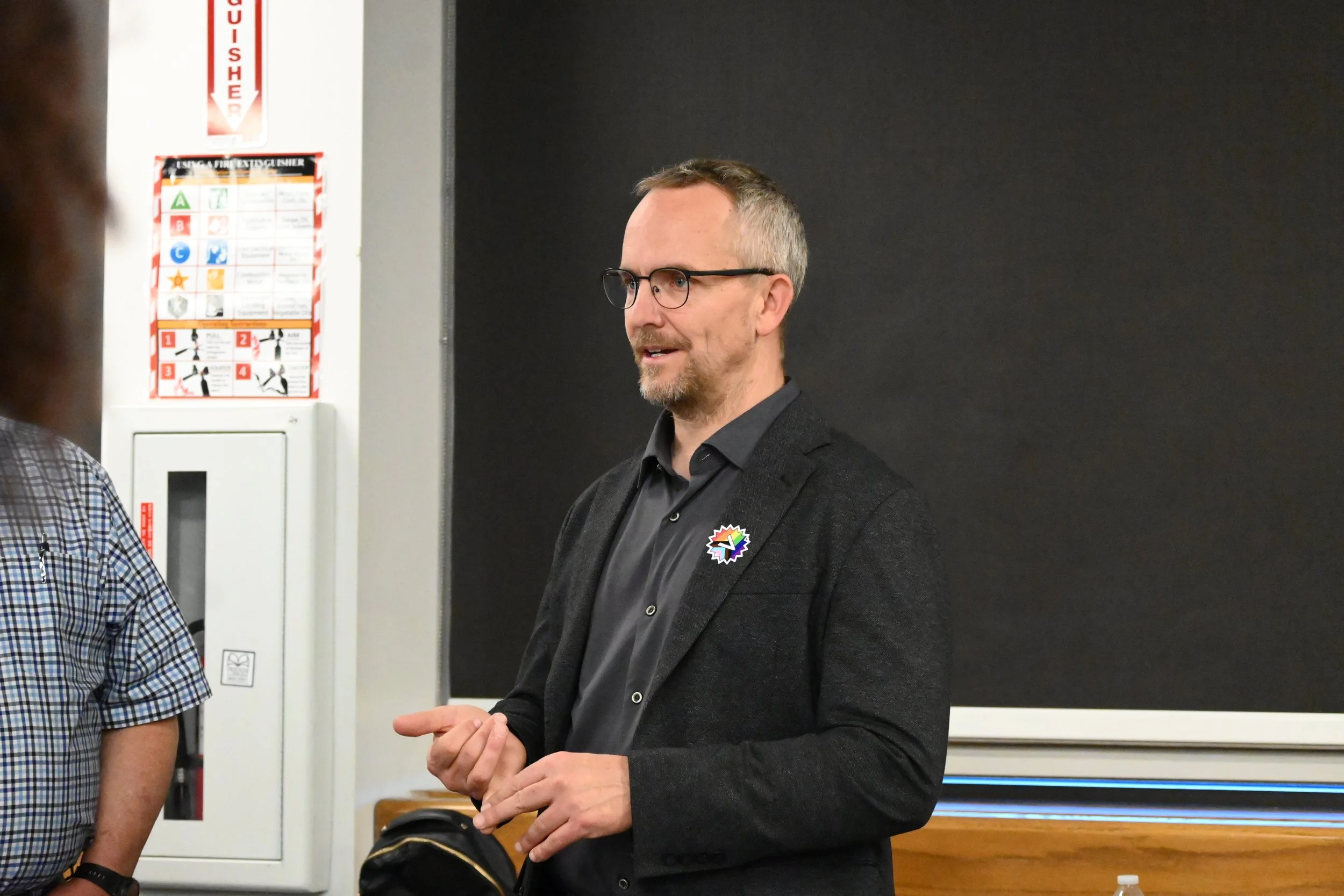
Meet Jeremy Dowell
A Q&A With Equinomia Legal’s Founder & Principal Trademark Attorney
Q: Let’s start with the basics—are you originally from Colorado?
A: Yep. I was born and raised in Canon City. I’ve moved around quite a bit since then. Went to college down in Arizona. First community college then Arizona State University. Spent a little time in Tokyo. I always seem to land back in Colorado though.
Q: Where did you go to law school?
A: Maine. And then I got an LL.M. in Environmental Law from Vermont Law and Graduate School. Basically I majored in accumulating tons of student debt.
Q: How long have you been practicing law?
A: I’ve been argumentative all my life. Does that count? It probably should. I started my own legal practice in Colorado Springs back in 2018. I did one divorce case essentially for free through the local modest means project. After that, 100 percent of my practice has been court-appointed guardian ad litem representation for kids in the juvenile justice system. Until recently when I launched the trademark practice.
Q: That actually is the perfect transition to my next question. Looking at your background, you started out advising a problem-solving court in a small district in Colorado, and then you transitioned to working as a guardian ad litem mostly in Colorado Springs. How does someone go from that to federal trademark law?
A: The common thread is a desire to level the legal playing field. The kids I work with usually need as much advocacy as possible, in and out of the courtroom. It’s good work to provide that, especially when they’re being pushed out of school by misguided district policies or crap like that.
Q: Surely there are other areas of law that would align with juvenile delinquency better. Why trademarks?
A: When I graduated from law school in 2010, the only thing I knew for sure is I wanted to work in the public interest. I didn’t even know what a guardian ad litem was until probably a year or two before I started my practice. I needed clients, and coincidentally the Office of the Child’s Representative needed private attorneys to take guardian ad litem cases here in Colorado Springs. GAL work appealed to me because of its public service orientation.
Q: Isn’t that a difficult line of work?
A: Very. Vicarious trauma, a decent size and steady caseload, and a lot of uphill battles. But every once in a while it feels like I might have moved the needle in a positive direction for a client and their family. That tends to make the difficult aspects a bit more manageable.
Q: So how did the trademark thing come about then?
A: A friend of mine met a trademark attorney at a conference he was attending, and he told me to check out a sort of mentorship/training program she provided. So I did, and that’s how I found out that a trademark practice is a great way to work with creative people and dreamers. I didn’t even realize that’s something that would be interesting to me, but it really is. I want to help them keep their businesses open if I can.
Q: What kind of help do they tend to need?
A: Of course it varies, but a lot of startup founders and established small business owners don’t realize the benefits of a federal trademark. Or they think they’re already covered when they’re not. A big part of what trademark attorneys do involves educating business owners about what a federal trademark is, why it’s risky to go without one, and exactly what the benefits are.
Q: One last question. What do you do when you’re not running your practice?
A: I’m a true solo lawyer, so the reality is I’m always running my practice. Maybe it’s possible to say I take time off in micro-doses — hanging out with my dog and two cats, listening to music, driving. I’ve always liked driving. Which is why I spend so much time in traffic, I guess.
“Globalization eliminated or drastically reduced many of the careers of the past that built the middle class in America.
This has already done real harm to upward economic mobility, and we don’t yet know if AI will help or make the problem substantially worse.
Launching a startup and running a small business is risky and hard. It requires vision, dedication, and a willingness to spend countless unpaid hours trying to turn a dream into a livelihood.
But even with the risks, we’re seeing a growing number of Americans investing in themselves in exactly this way.
That is breathing new life into our broader economy and the American dream.
I want to do what I can to help these entrepreneurs stay open for business.”